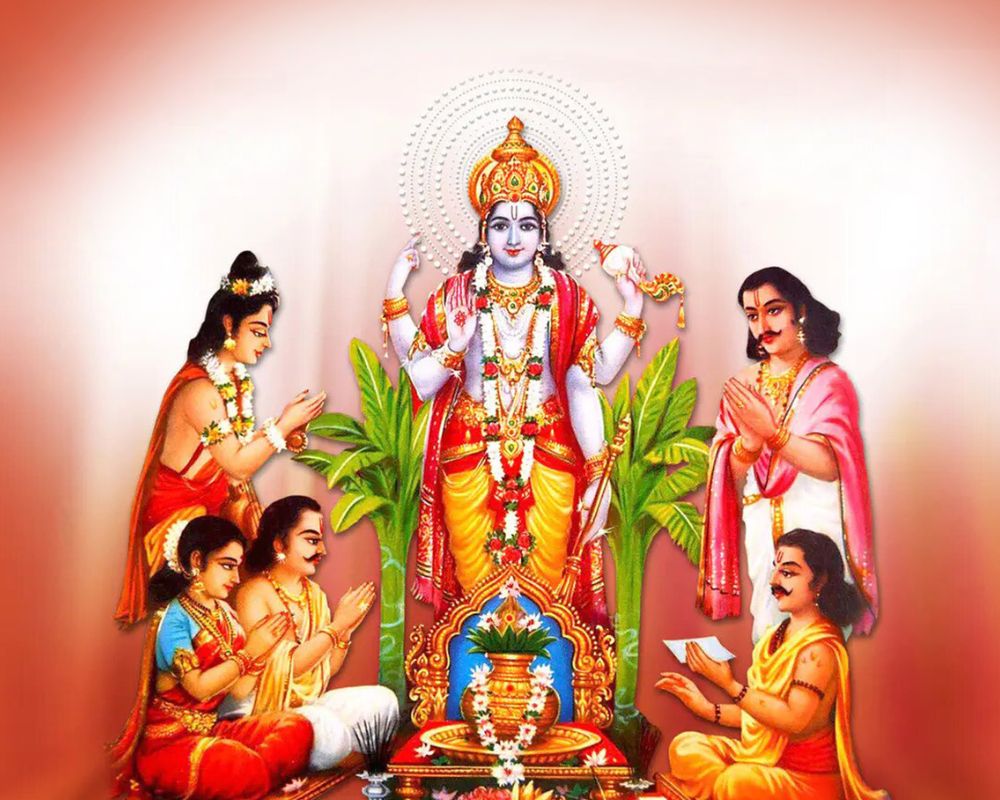
The Satyanarayan Katha is one of the most revered Vedic rituals observed by Hindus to express gratitude to Lord Vishnu in his benevolent form as Satyanarayan, the embodiment of truth and sustainer of the universe. This auspicious ritual is performed to seek divine blessings for prosperity, health, happiness, and the fulfillment of desires.
Spiritual Significance: The word “Satya” means truth, and “Narayan” is another name for Lord Vishnu—the protector of the universe. Devotees believe that by performing this Katha with devotion and sincerity, one can overcome obstacles, reverse misfortunes, and bring harmony and spiritual growth into one’s life.
When is Satyanarayan Katha Performed?
-
On full moon (Purnima) days
-
During housewarming (Griha Pravesh)
-
Before starting a new venture or business
-
On birthdays, anniversaries, or after fulfilling a vow (mannat)
-
After major milestones or life achievements
Ritual Structure & Storytelling:
-
Purification & Setup: The puja begins with cleaning the home and setting up a sacred altar with an idol or picture of Lord Satyanarayan, decorated with flowers, incense, and diya (lamp). A kalash (holy vessel) filled with water is also placed, symbolizing divinity.
-
Sankalpa (Vow of Intention): The host takes a vow (sankalpa) with the priest, stating the purpose of the puja, names of the family members, and offering prayers for peace and prosperity.
-
Ganesh and Navagraha Puja: Lord Ganesha and the nine planetary deities (Navagrahas) are worshipped to remove obstacles and ensure celestial blessings.
-
Satyanarayan Puja: Offerings such as panchamrit (five nectar mixture), tulsi leaves, fruits, sweets, and sacred water are presented to the deity, accompanied by chanting of Vishnu mantras.
-
Katha Recitation: The priest or host narrates the Satyanarayan Katha—five chapters filled with moral lessons and examples of how devotion to Lord Satyanarayan leads to blessings. Stories include merchants, kings, and commoners who were rewarded for their faith and punished for negligence.
-
Aarti & Prasad Distribution: The ritual concludes with aarti (devotional song) and distribution of holy prasad, especially the traditional sheera (sweet offering made with semolina, ghee, and sugar).
Benefits of Performing Satyanarayan Katha:
-
Ensures peace and well-being in the family
-
Brings prosperity and abundance
-
Helps in fulfilling personal and professional goals
-
Clears negative energies and karmic burdens
-
Strengthens spiritual discipline and family bonding
Vedic Pasal Satyanarayan Katha Kit Includes:
Satyanarayan photo frame or idol
Panchapatra and kalash set
Puja thali, diya, wicks, and camphor
Sandalwood, turmeric, kumkum, incense, and ghee
Tulsi leaves, dry fruits, and grains
Prasad ingredients (semolina, sugar, cardamom, ghee)
Printed or digital Katha book in Nepali and Sanskrit
Available in:
-
Basic Family Kit (for 4–5 participants)
-
Extended Group Kit (for 10+ participants)
-
Online & Physical Combo Kit with guided audio/video Katha
Make every occasion divine with our authentic, blessed Satyanarayan Puja Kits — delivered to your doorstep with care and devotion.