
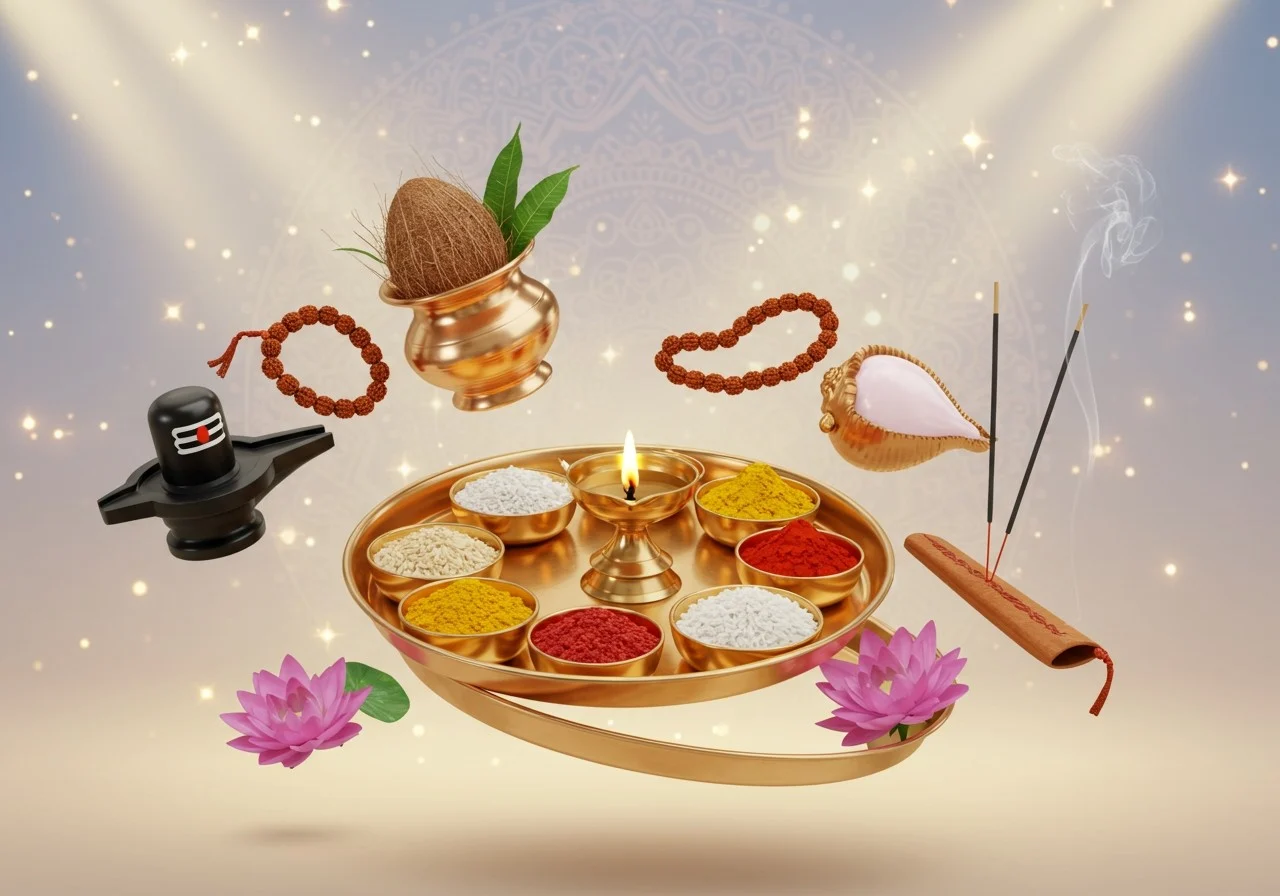
Puja is not just a ritual—it’s a sacred connection with the divine. The ingredients used in a puja, called samagri, play an essential role in enhancing its spiritual energy and effectiveness. Choosing the right puja samagri for different occasions ensures that the ritual is performed with devotion, accuracy, and proper tradition.
Below is a guide to help you choose the correct samagri based on the type of puja or occasion:
-
Daily Puja (Nitya Puja)
Essential Items:
-
Diya (oil lamp with ghee or oil)
-
Incense sticks (agarbatti)
-
Sandalwood paste (chandan)
-
Kumkum and haldi (turmeric)
-
Fresh flowers and leaves
-
Holy water (Ganga jal)
-
Bell (ghanti)
-
Camphor (kapoor)
-
Fruits or cooked offering (naivedya)
These items are used for simple, everyday worship to maintain spiritual balance at home.
-
Satyanarayan Puja
Additional Samagri:
-
Satyanarayan katha book or printed story
-
Panchamrit (milk, curd, honey, ghee, sugar)
-
Banana leaves
-
Supari (betel nut)
-
Kalash with coconut and mango leaves
-
Sweets (sheera or halwa)
-
Tulsi leaves
This puja is performed for prosperity, blessings before big life events, or on Purnima (full moon).
-
Rudri Path or Shiva Puja
Additional Samagri:
-
Rudraksha beads
-
Bel Patra (Bilva leaves)
-
Milk, honey, sugar, curd, ghee (for Abhishek)
-
Datura flower and fruit
-
White cloth
-
Sandalwood powder
-
Ganga jal
These are used to perform Abhishekam on the Shivling, invoking Lord Shiva’s blessings for peace and removal of negativity.
-
Ganesh Puja or Ganesh Chaturthi
Additional Samagri:
-
Durva grass (21 blades)
-
Modak or laddoo
-
Red flowers
-
Coconut
-
Banana
-
Sindoor (vermilion)
-
Ganesh idol or image
Lord Ganesh is worshipped first in any puja for removing obstacles and bringing success.
-
Navratri or Durga Puja
Additional Samagri:
-
Red cloth
-
Coconut (with husk)
-
Akshat (uncooked rice with haldi)
-
Lotus flowers
-
Camphor and ghee diya
-
Turmeric root
-
Cloves and cardamom
Special pujas to invoke various forms of Goddess Durga for strength, protection, and spiritual power.
-
Lakshmi Puja (Diwali or Fridays)
Additional Samagri:
-
Silver or brass Lakshmi idol
-
Lotus seeds (makhana)
-
Coins (for wealth symbol)
-
Sugar crystals (mishri)
-
Rose or lotus flowers
-
Ghee diya with multiple wicks
A special puja for wealth, prosperity, and abundance.
-
Hanuman Puja or Hanuman Jayanti
Additional Samagri:
-
Red cloth and sindoor
-
Boondi laddoo
-
Jasmine oil for lighting diya
-
Hanuman Chalisa book
-
Betel leaves
Used to seek strength, courage, and protection from negative forces.
🛍 Tips to Buy the Right Puja Samagri:
-
Always opt for fresh and pure items.
-
Choose natural ingredients free from chemicals or artificial scents.
-
Check for authenticity when buying sacred items like Rudraksha, gemstones, or idols.
-
Use pre-packed puja samagri kits for convenience and accuracy.
At Vedic Pasal, we offer carefully curated puja samagri kits for every type of ritual, ensuring you never miss a sacred detail. Each item is ethically sourced and blessed, ready to bring purity and power into your worship.